
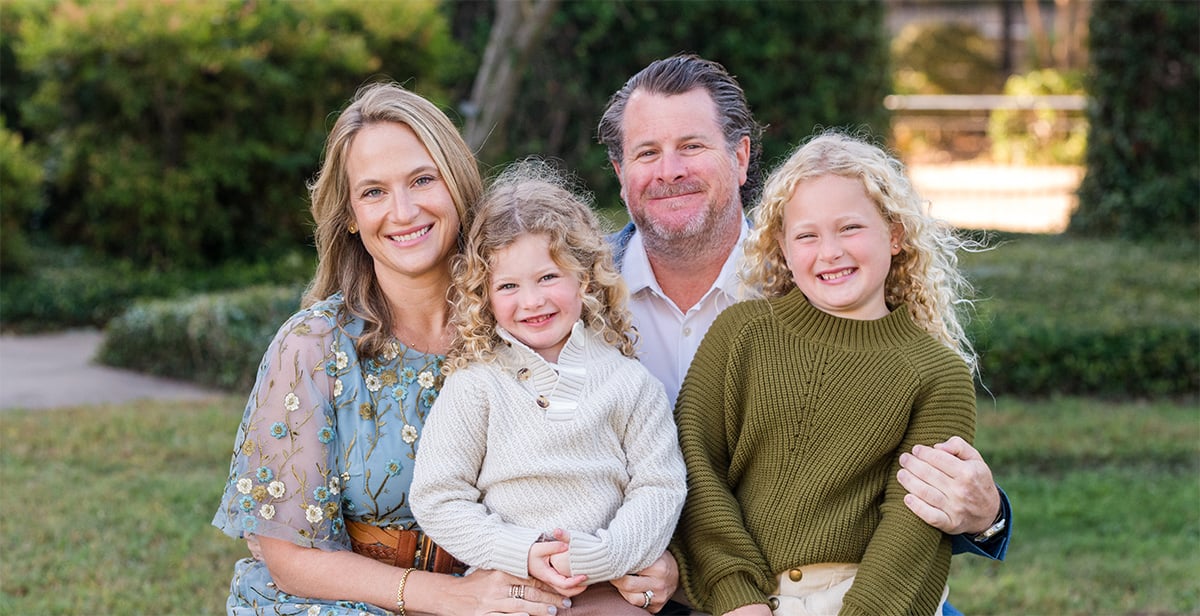
For Kirstin and Kyle, philanthropy isn’t just about writing checks—it’s about building healthy communities. From their daughters’ school to cancer research in honor of Kyle’s late father, they’re focused on investing locally while thinking generationally. In this spotlight, they share their strategic approach to giving, why the Bradley Impact Fund aligns with their values, and how they’re inviting their peers to join them in hands-on philanthropy.
With all the donor-advised fund options available today, why do you choose to work with the Bradley Impact Fund?
Kirstin: My full-time job is in national politics, so I’ve been aware of The Lynde and Harry Bradley Foundation for quite a while. When Kyle and I decided to get more strategic about our philanthropy, the Bradley Impact Fund was the obvious choice. The values alignment was important, but since then, our experience with Sherry and the team has been such a pleasure. The personal touch is so different than working with large banks where you’re shuffled between representatives. One time in particular comes to mind, when Sherry and the team helped resolve a payment confusion issue with my alma mater in a way that was so much better than our experience with banks.
Kyle: Kirstin really brought us to the Impact Fund, and it’s been a great fit. The DAF model in general helps us with tax advantages and with our strategic approach to giving, since in the investment and property field income can vary dramatically from year to year. But it’s flexible, too, in that we can also just give on short notice—the Impact Fund’s portal is especially helpful for that, particularly with repeat gifts.
How would you describe your philanthropic vision and strategy?
Kirstin: Something Brooke Romney said has stuck with me: We shouldn’t protect our time and ease at the expense of our humanity . . . If you want a village, you have to be a villager. That matches our philosophy of giving primarily to our church, school, and community groups in the Dallas area, where we can also volunteer and be a part of things. Even with our local philanthropy, the Impact Fund’s donor portal is so helpful for repeat gifts to our favorite organizations without having to start from scratch every time.
Kyle: We do give to some national groups, but when we focus our philanthropy on local and grassroots initiatives, we can see direct impact, like at the kids’ school and our church. It’s really more about building a healthy local community than government solutions. But one national group we do support is National Cancer Society, whose largest annual event is held right here in Dallas. I lost my dad to cancer three and a half years ago, and it was very hard. We didn’t have much notice, and it came on very quickly. We’d already supported them, and this increased our passion about funding research to end cancer.
Kirstin: Government definitely has a role, but community has a bigger impact on solving problems that affect people directly. I spend sixty hours per week supporting candidates at federal and state levels, but as far as our personal giving, we emphasize the local. Our kids’ school has a simple mission statement: they’re about raising good humans. That really captures something important: we want our daughters to become great people, which will always include sharing the blessings we’ve received.
What do you want to see in your community, in Texas, and in America?
Kyle: We’d like to see America return to core values of faith, kindness, and community, hence our focus on local issues like education, homelessness, and addiction in the Dallas area. The Impact Fund provides important guidance and guardrails to ensure charitable intentions are properly directed and managed.
Kirstin: It’s not just about us, either—we’re trying to bring our peers into this approach, since a lot of us in our forties aren’t used to this direct approach to philanthropy. We’re always inviting our friends to show up, volunteer, and get personally involved in the organizations that are making things better. We feel this is a calling, so we’re trying to lead by example—both for other younger philanthropists, and we want to make sure our daughters see us giving and involved with our church, school, and local charities. We want them to know that freedom and responsibility go together—if you don’t take seriously your responsibility to care for others, your freedom won’t last.